
Microsoft Windows OOBE Privacy
Industry
Consumer Technology
Client
Microsoft Windows
Designing meaningful privacy choices during first-time PC setup
I led the design of a Windows Out of Box Experience privacy flow for privacy-sensitive markets under GDPR. The work moved from an unresolved regulatory and usability problem through research, iteration, stakeholder alignment, system definition, and final design delivery.
Project Details
Industry
Consumer Technology
Client
Microsoft Windows
Role
Senior Product Designer and Design Lead
Year
2024-2026
Platform
Windows
The Problem
Windows OOBE appears when someone starts a new PC for the first time. The existing privacy experience risked allowing people to proceed without making an intentional choice. An option might already be selected and the Next button active.
Under GDPR, the experience needed to support an informed and unambiguous decision. Legal disclosure requirements also pushed dense explanations into the choice controls, making them difficult to scan and compare.
My Role
I served as the sole design lead for this experience. I led the work from early problem definition through concept development, research, iteration, stakeholder alignment, system definition, and final design delivery.
I partnered with Research, OOBE product and design, Engineering, Privacy, Legal, and CELA. I created prototypes, synthesized research findings, negotiated content decisions, and developed reusable OOBE components and interaction patterns.
Process
I established five requirements for the experience: no preselected outcome, clear action-based labels, equal treatment for each choice, access to detailed disclosure, and consistent behavior across privacy settings.
I explored binary and granular choice models, combined settings, content hierarchy, and interaction states. Research showed that younger Windows users often wanted greater control than traditional opt-in and opt-out patterns provided. Privacy-principle reviews also identified concepts requiring further improvement.
Through successive research and stakeholder reviews, I refined the experience and negotiated a structure separating the immediate decision from detailed legal information.
Design
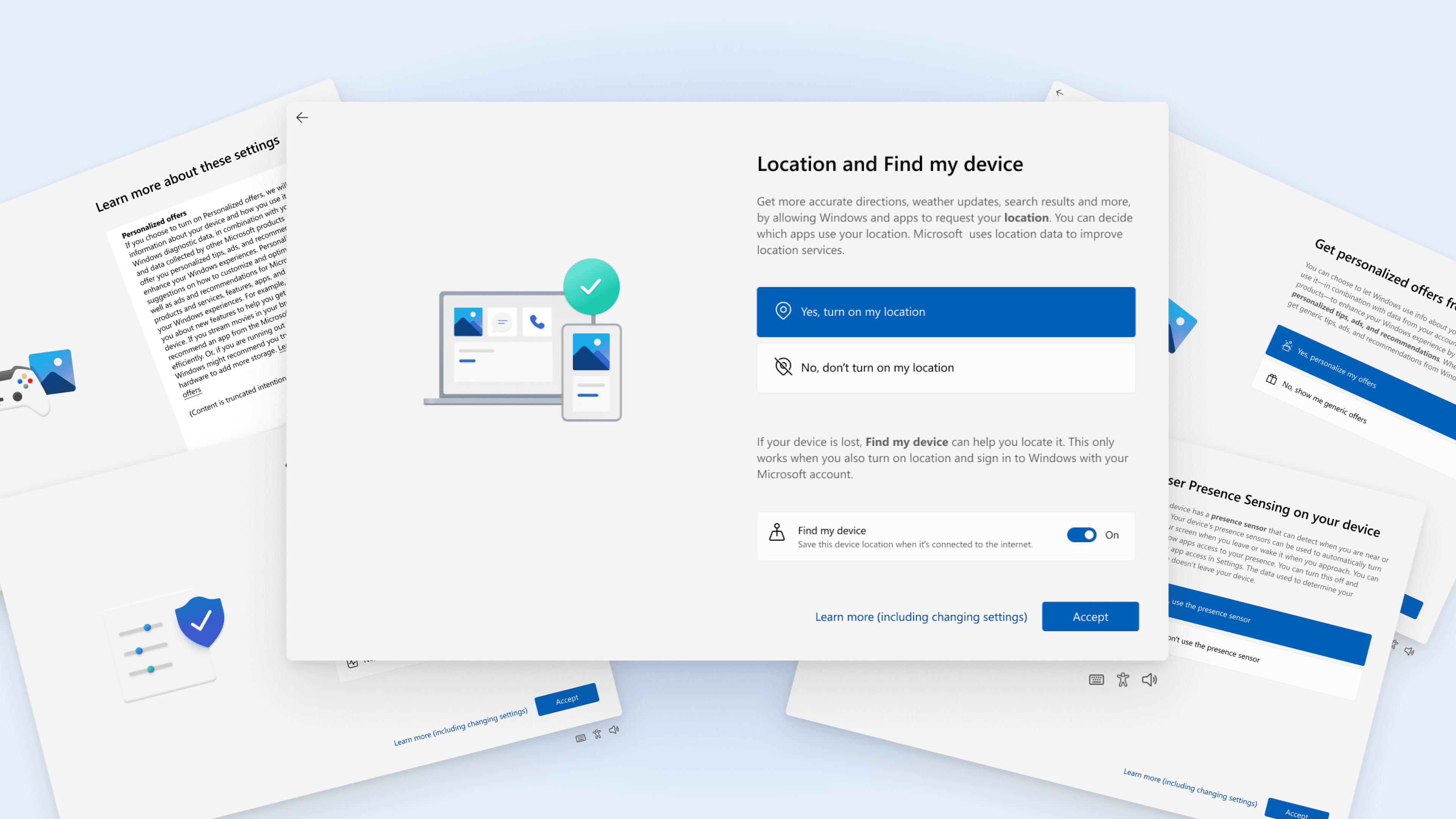
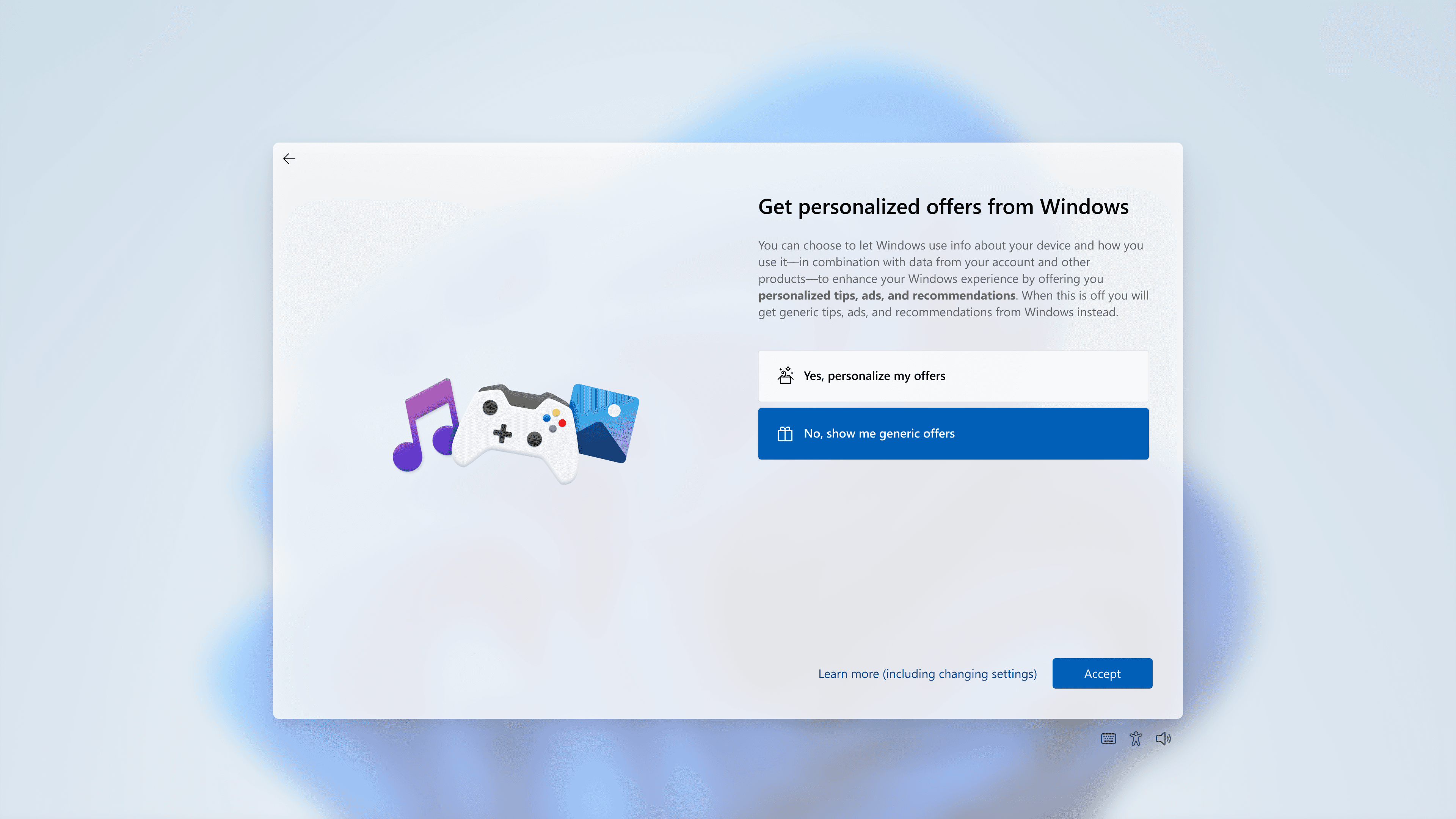
The final model placed the action and consequence directly in each choice label. Detailed privacy information remained available through supporting content and Learn more.
No option was selected in advance. The user had to make a deliberate choice before proceeding. The same interaction model worked across diagnostic data, personalization, presence sensing, location, and Find my device.
I also defined the supporting Figma components, states, and usage patterns. Concepts from this work were adopted into the broader Windows OOBE design system.
Final product screens and key interaction details.


Outcome
Research, CELA, OOBE, Privacy, Engineering, and Design aligned on one final direction. The solution preserved access to legal information while giving users clear privacy choices without a preselected outcome.
The work established a repeatable interaction model for privacy decisions across Windows OOBE. Concepts from the project were adopted into the broader global OOBE design system, extending the work beyond the original experience.
Next Project